What the Screen Time Research Actually Found
A Finnish 8-year study found kids with more screen time showed better cognitive processing as teens. The parenting internet hated it. Here's what the research actually says.

April Campos · Co-founder & CMO
· 6 min read

A Finnish Study Said Screen Time Kids Turned Out Fine. The Internet Did Not Take It Well.
Here is a thing that happened: researchers in Finland followed 260 kids for eight years, tracked their screen time, their physical activity, and their cognitive performance, and published their results in August 2026. What they found was that children who spent more time on screens tended to show better cognitive processing as teenagers.
Not worse. Better.
If you have spent any time in parenting spaces online, you know exactly what followed. People either ignored the study, misread it, or reached for the nearest caveat to neutralize it. The caveat is real, by the way, and we will get to it. But the impulse to immediately defuse a finding because it does not match the anxiety everyone has already committed to, that is its own thing worth naming.
Screen time cognitive development is one of those topics where the fear arrived before the evidence did, and the evidence has been trying to catch up ever since.
What the Study Actually Found (Read This Part)
The Finnish study ran for eight years. It used a cohort of 260 adolescents, average age 15.8 at follow-up, drawn from the PANIC study on children's physical activity and nutrition. Researchers tracked both survey-reported behavior and device-measured movement data.
The headline finding: more screen time in childhood was associated with better cognitive processing in adolescence.
Here is what the researchers were careful to say: this is a correlational study. It shows association, not causation. Screen time alone does not produce sharper cognitive processing. What the researchers pointed to was the type of screen use, specifically activities involving active thinking, problem-solving, and creativity. Context matters. Content matters. The sensor data could not tell researchers what kids were actually doing on their screens, only how long they were on them.
So the nuanced read is this: passive consumption marathon-watched in isolation probably looks different from interactive, engaged, cognitively demanding screen use. The data does not let us separate those cleanly. What it does do is stop us from treating all screen time as a uniform threat to children's development.
That is not a small thing. That is actually the whole ballgame.
Why Most Coverage Got This Wrong
There are a few ways a study like this gets mishandled.
The first is overclaiming: "Screen time makes kids smarter!" That is not what the study says. Correlation is not causation, and the researchers said so explicitly.
The second is underclaiming: burying the finding under so many caveats that the actual result disappears. You end up with coverage that says "researchers found some association but it is complicated so probably just limit screens anyway." That is not science journalism. That is anxiety management dressed up as rigor.
The third, and most common, is just ignoring it. A longitudinal study with eight years of data that challenges the prevailing narrative gets less traction than a think-piece about iPads ruining childhood attention spans. The incentives in parenting content are not pointed at nuance.
For anyone genuinely asking "does screen time affect kids brain development," the honest answer after this study is: it depends on what they're doing, and the relationship is more complicated than the fear suggests.
The Reward Problem Is Real, Just Not the One You Think
Here is where I will give the screen time panic some credit: there is a documented problem. It just is not about cognitive development. It is about how parents use screens.
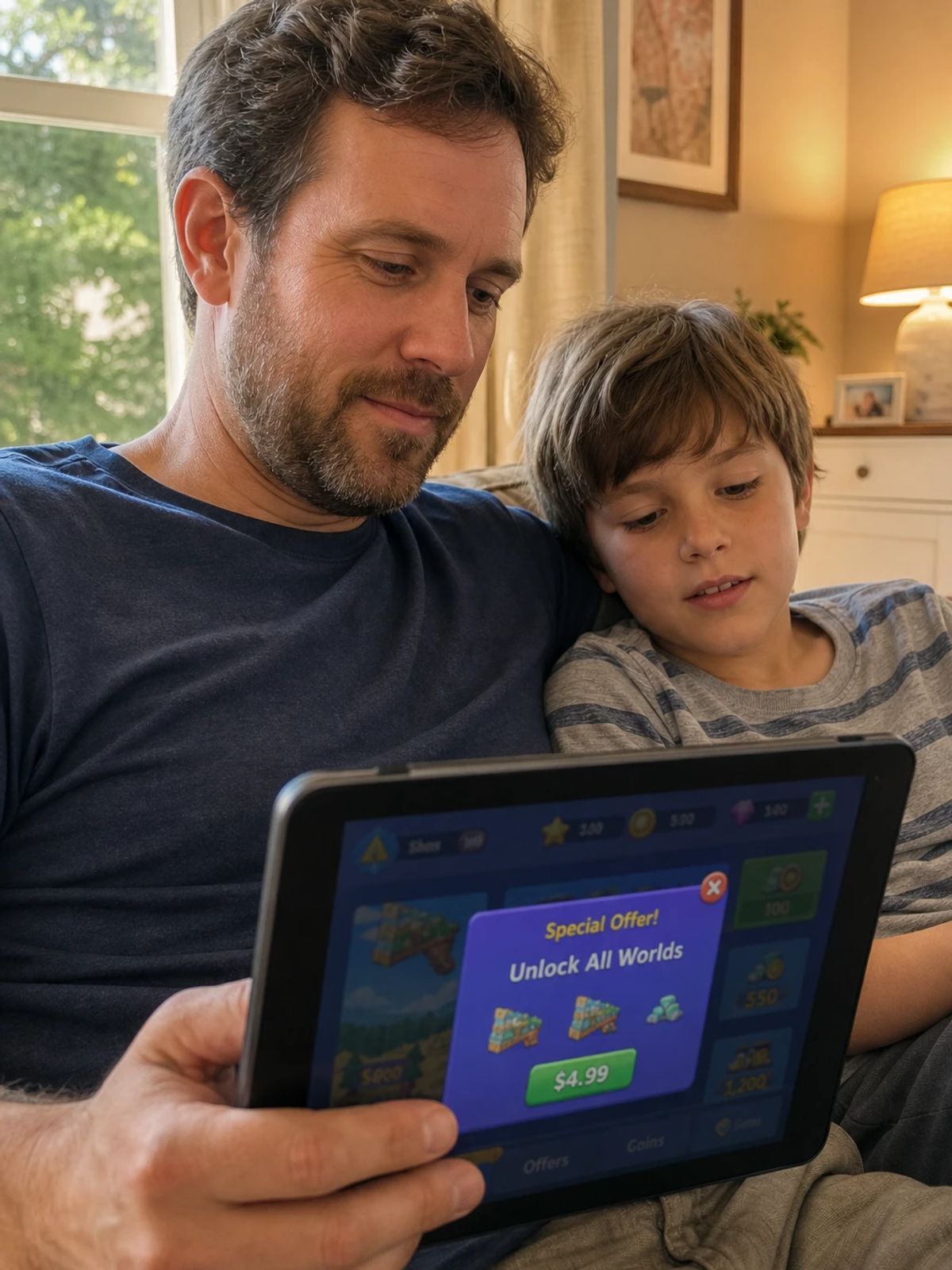
Research published in August 2026 found that when parents routinely use screen time as a behavioral reward, something specific and predictable happens over time. Homework, chores, and family activities start to feel like obstacles. The kid is not experiencing those things as inherently valuable. They are just barriers between them and the reward.
The mechanism is dopamine. Fast-paced games and social media produce dopamine hits that make everything else feel flat by comparison. Do that long enough and the baseline for "this is worth my effort" shifts. Kids start bargaining more, escalating emotionally when devices are taken away, and disengaging from offline activities.
Notice what this is actually about. It is about using screens as a behavior management tool, as leverage, as a carrot. That is a parenting structure problem, not a screen content problem. The screen time effects on children that researchers keep finding negative are frequently downstream of how screens are being deployed in the family dynamic, not the screens themselves.
The distinction matters if you want to actually address it.
What the AAP Did (And Why It Got Quiet)
The American Academy of Pediatrics used to publish rigid screen time limits. Under X hours per day for children under Y age. Simple. Shareable. Exactly the kind of guideline that feels authoritative and is easy to put in a headline.
Then the AAP updated its position. Instead of hard time limits, they shifted to asking parents to look at what kids are watching, who they are watching with, and what the screen time is replacing. Quality, context, and displacement, not clock time.
That update got significantly less coverage than the original time-limit guidelines did. It is harder to post about. "Think contextually about media use" does not perform as well as "no screens before age 2." The new framework requires more parental judgment and fewer rules, which is genuinely less comfortable but more honest.
The screen time and learning research has been moving in the same direction for years. Passive, solo, high-stimulation content in large unstructured blocks is not the same as active, educational, or socially connected screen use. The research keeps finding this. The parenting content ecosystem keeps flattening it.
So What Does "Good" Screen Time Look Like
Based on what the research actually supports, here is a working framework. Not rules. A lens.
- What are they doing. Problem-solving, creating, communicating, learning. These show up differently in the data than passive consumption.
- What is it replacing. Sleep, physical activity, and face-to-face interaction showing up less is a different situation than substituting for a third viewing of a show they have already seen.
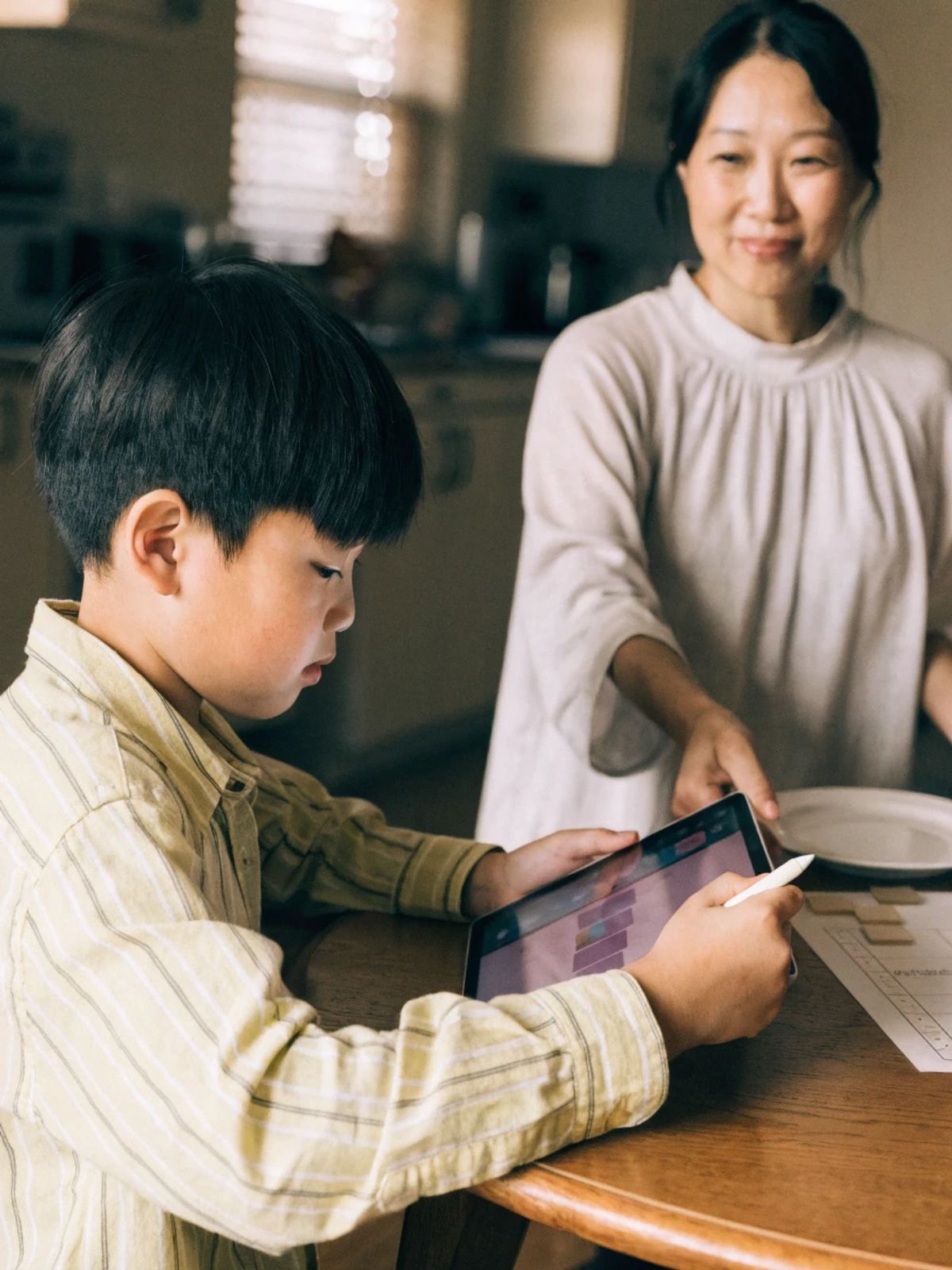
- Who are they with. Co-viewing and co-playing with a parent or sibling produces different outcomes than solo use. The Finnish researchers noted this. The AAP noted this. It keeps coming up.
- How is it structured. Predictable, bounded screen time that the child understands is different from open-ended use or use tied to behavioral compliance.
Is screen time bad for kids? In the uniform, all-screen-use-is-equivalent way the question usually gets asked, the evidence does not support a yes. In specific configurations, specifically as an unstructured dopamine delivery system or a behavior management tool deployed arbitrarily, the evidence does support some concern. Those are different questions.
One More Thing About Using Screens as Rewards
If the research on using screens as behavioral rewards is concerning (and it should be), the issue is not screen time itself. The issue is the structure around it.
There is a meaningful difference between a parent taking a device away as punishment or granting it as a bribe, and a child choosing to spend earned points on screen time because that is what they wanted to work toward. One is arbitrary leverage. The other is a kid exercising agency inside a system that makes sense to them.
This is what we built Chore Battles to support. Kids 6 to 17 earn points by completing chores, and those points go into a family Rewards Store where parents set what is available: screen time, treats, allowance, whatever makes sense for the family. Parents see photo verification when chores are done. The family fights a weekly boss together, with every completed chore landing a hit.
The screen time that shows up in the Rewards Store is not leverage. It is an outcome the child chose and worked toward. That is the structure the research suggests matters. The app is free to download on iOS and Android, with an optional premium tier. It is COPPA compliant, no targeted ads at kids, never sells data.
If you are on the waitlist, you will hear from us first when we launch.
Join the Chore Battles waitlist
Related reading:
Chore Battles
A chore tracker that runs like a game — creatures that grow, a weekly family boss, and a leaderboard that resets every Monday. Free to download.
Join the waitlist