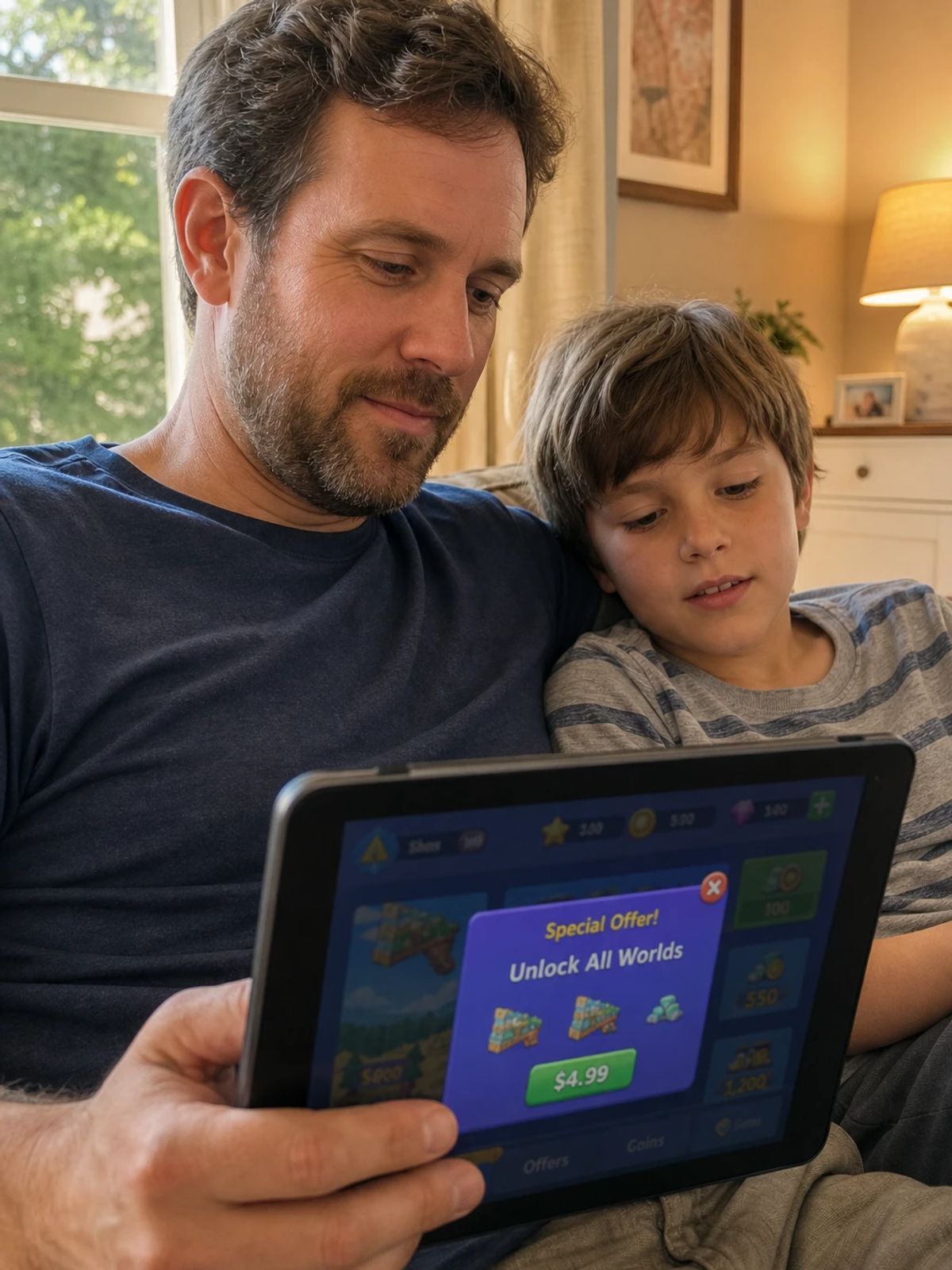
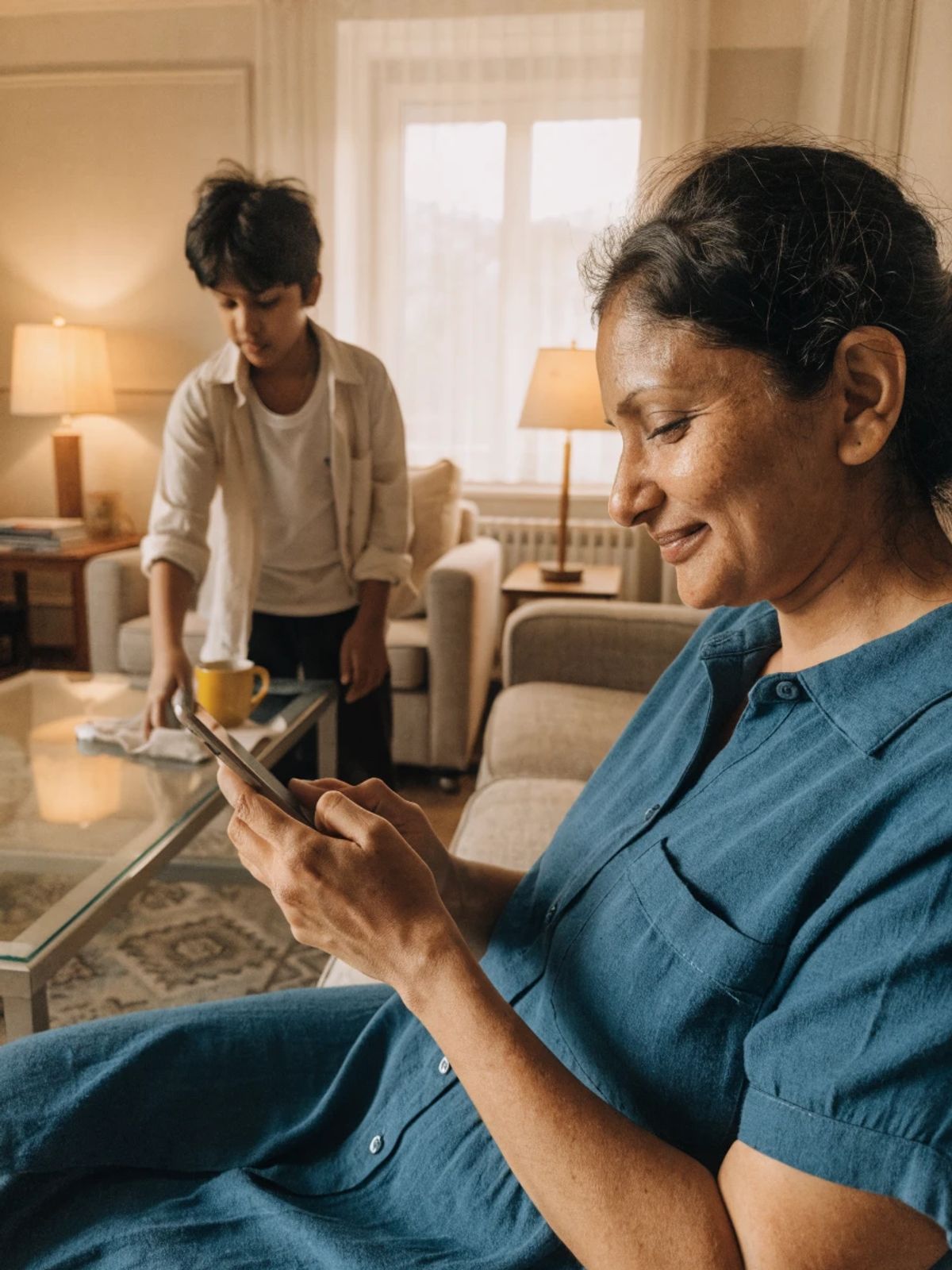
The AAP Dropped Its Screen Time Limits. Here's What Replaces Them.
The 2026 AAP screen time guidelines retire the hourly limit. Here's the quality, context, and displacement framework that replaced it, and how to actually use it.

AJ Campos · Co-founder & CEO
· 7 min read

The AAP Dropped Its Screen Time Limits. Here's What Replaces Them.
In January 2026, the American Academy of Pediatrics retired the hour-based screen time limit. It arrived as a policy statement rather than a headline moment: an updated framework on HealthyChildren.org, the AAP's own patient-facing site, that stopped telling parents to count minutes.
I run a household with two teenagers and a company that builds apps for kids. I've been waiting for this update for a while, because the two-hour number never made sense as a universal rule. Two hours of a video call with grandma and two hours of an algorithmic feed are not the same event. They were never going to be the same event. It took the AAP until 2026 to formally say so.
Here's what changed, why it changed, and how to actually apply it without needing a stopwatch or a PhD.
Why the Hourly Limit Got Retired
The old guidance, one hour a day for ages 2 to 5, general moderation after that, was written for a media landscape that doesn't exist anymore. It assumed screen time was one activity: passive viewing. TV, basically.
That assumption stopped holding a long time before the AAP admitted it. A kid's device now handles video chat with a grandparent, a school assignment, a creative app, a group chat, and a short-form video feed engineered by people whose full-time job is holding attention. Counting all of that as one undifferentiated block of "screen time" and applying a single hourly cap to it was never going to produce good advice. It produced a number parents felt guilty about missing and pediatricians got tired of repeating.
The new guidance, covered in outlets including EdSurge, replaces the clock with a framework called the 5 Cs: Child, Content, Calm, Crowding Out, and Communication. Age and temperament. What's actually on the screen. Whether it's regulating the kid or wiring them up. What it's pushing out of the day. And whether you're talking about it together instead of it happening in a sealed-off room.
Three of those five, Content, Calm, and Crowding Out, are really one idea wearing three names: quality and context matter more than quantity. That's the actual headline. The number is gone. The question that replaced it is better, but it's also more work, which is probably why it took this long to catch on.
The Question That Actually Matters: What Is This Displacing?
Of the 5 Cs, Crowding Out is the one worth building a habit around, because it's the one you can evaluate without knowing anything about content ratings or algorithm design.
The question is simple: what did this screen time take the place of?
An hour of a strategy game after homework, chores, and enough sleep is a very different hour than one that ate the homework, the chores, and forty-five minutes of the sleep window. Same device. Same duration. Different verdict. The old hourly cap couldn't tell those two hours apart. It counted them identically and called that consistency. It wasn't consistency, it was just blindness to the thing that actually mattered.
This reframes the parenting problem correctly. You are not the minutes police. You are managing a limited resource, your kid's day, and figuring out what a given block of screen time is costing.
In practice, that means checking against a short list before the screen time, not during a fight about it:
- Sleep. Did it eat into bedtime, or happen after the wind-down was already done?
- Movement. Was there any physical activity today, or has the kid been sitting since they got home?
- Family time. Did this replace dinner, a conversation, the twenty minutes you actually see each other?
- Responsibilities. Did chores or homework get skipped, or did the screen show up after they were handled?
- The activity itself. Is this content the kid is passively absorbing, or one they're actively doing something with?
None of that requires an app that tracks minutes. It requires actually looking at what got pushed out of the day, which takes about ten seconds once it's a habit.
Screens Aren't Uniformly Bad. That's the Nuance, Not the Headline.
Here's a data point that complicates the simple "less is better" story, and I want to be precise about what it does and doesn't show.
Researchers at the University of Jyväskylä in Finland tracked around 260 kids for eight years, from childhood into adolescence, using wearable activity monitors alongside screen time questionnaires. When the kids reached an average age of just under 16, the team ran them through cognitive tests measuring learning, attention, and working memory. The result, published in August 2026 in the journal Pediatric Exercise Science, ran against what the researchers expected going in: kids with more screen time since childhood showed better cognitive processing as teens, not worse.
That is not a green light to hand over the tablet and walk away. The researchers were explicit that the type of screen activity is what's carrying the effect, not the raw hours. Their language, paraphrased from their own summary, was that the benefit shows up when screen use involves active thinking, problem-solving, and creativity, not passive consumption. A kid building something, solving something, or creating something on a screen is doing a fundamentally different activity than a kid scrolling.
I'd flag this as directionally interesting and worth knowing about, not as a study you should build a parenting philosophy on. One paper, one country, one age cohort. But it lines up cleanly with what the AAP's own framework is now arguing: the content and context of screen time carry more weight than the total minutes. Two independent sources landing on the same conclusion from different directions is worth paying attention to, even if neither one is the final word.
What This Looks Like by Age (Without Turning Into a New Stopwatch)
The AAP kept a small amount of age-anchored guidance, mostly at the edges where the science is more settled. Those numbers come from its policy statement Media and Young Minds:
- Under 18 months: avoid screens outside of video calls with family. This range didn't change, the evidence for it is old and solid.
- Ages 2 to 5: around an hour a day of high-quality, age-appropriate content, ideally with a parent nearby to talk through what's happening on screen. Still a rough number here, because very young kids don't yet have the judgment to self-regulate content or context.
- Ages 6 and up, including teens: no fixed number. The AAP points families toward building their own Family Media Plan, agreed on together, evaluated with the 5 Cs instead of a clock.
That last point is the real shift. For the age range most parents are actually stressed about, elementary through high school, the AAP stopped issuing a number at all. It handed the judgment call back to the family, with a better framework for making it.
Where Chore Battles Fits Into the Displacement Question
I build a chore app for a living, so I'll be direct about why this framework matters to me specifically, not just as a parent.
Crowding Out only becomes a hard question when the thing being displaced is something the kid would never choose on their own. Chores are usually at the top of that list. Nobody's algorithm is optimized to make a ten-year-old want to unload a dishwasher, so screens win that matchup by default, every time, with zero effort.
Chore Battles doesn't try to out-compete a feed on raw stimulation. It borrows the same reward-loop mechanics, a creature that grows with every completed chore, a weekly boss the whole family fights together, a leaderboard that resets so a bad week doesn't follow you into the next one, and points a kid actually cares about cashing in. The chore becomes the thing generating the immediate feedback, instead of the thing standing between a kid and the device that provides it.
That doesn't resolve the displacement question. It changes the math behind it. If chores stop being the friction-filled task screen time constantly wins against, the trade-off gets easier to evaluate honestly, for the kid and for the parent doing the evaluating. It's also COPPA compliant: no ads targeted at kids, no selling kid data, which matters if you're already thinking hard about what's on the other side of that screen.
We didn't build it to fight the AAP's framework. We built it to make the framework easier to live inside.
Join the Chore Battles waitlist
The hourly limit is gone. What replaced it asks more of you, but it's also just a more honest question. Not how many minutes. What did the minutes cost.
Chore Battles
A chore tracker that runs like a game — creatures that grow, a weekly family boss, and a leaderboard that resets every Monday. Free to download.
Join the waitlist