Life Skills for Kids: What Game Designers Know That Most Parents Don't
Kids spend hours mastering video games but won't take out the trash. That's not laziness; it's game design. Here's what the research says about teaching life skills for kids that actually stick.

AJ Campos · Co-founder & CEO
· 6 min read
The Engagement Problem Nobody Talks About
A kid can spend forty hours learning the crafting system in Minecraft. The same kid can't remember to put his shoes away for forty seconds.
You could call that laziness. I'd call it a design problem.
Teaching life skills for kids is, at its core, an engagement problem. And game designers have spent decades solving engagement problems. We should probably pay attention to what they figured out.
Five Things Games Get Right That Chore Charts Get Wrong
1. Immediate Feedback
In a game, every action produces a response. You swing a sword, you see a number pop up. You plant a seed, something grows. The loop is tight: action, consequence, repeat.
A chore chart gives you a blank square and tells you to wait until Friday when someone might put a sticker on it. That is not a feedback loop. That is a delay loop.
A 2024 study published in PLoS One by Li, Chen, and Deng found that digital educational games positively influence student motivation for learning, with learning engagement as the key mediating factor. The mechanism is the same one games have always used: you do something, you immediately see that it mattered.
2. Visible Progress That Compounds
Games show you an XP bar. A skill tree. A creature that grows. Every completed action moves something forward, and you can see it.
Most chore systems do the opposite. The chart resets every week, which means the kid who did everything right last week starts Monday at zero. There is no memory of effort, no accumulating story.
Progress that disappears isn't progress. It's a treadmill.
3. Autonomy Within Structure
A good game gives you a mission. It doesn't tell you which way to walk. You choose the path, the order, the approach. That agency is not incidental. It is why the game feels like play instead of work.
A rigid chore list with no room for negotiation reads as control. According to Ryan and Deci's self-determination theory, published in the American Psychologist in 2000, autonomy is one of three core psychological needs driving intrinsic motivation. Undermine it and you don't just lose compliance. You lose the desire to engage entirely.
This doesn't mean no structure. It means giving kids some say in how and when a task gets done, within limits you set.
4. Stakes With Mercy
In a game, you can fail. You can have a bad run. You respawn, the game doesn't hold it against you forever, and you try again.
Family chore systems frequently have no such mercy. One sick week, one busy month, and the whole system collapses. Kids who fall behind can't recover. At that point, there's no rational reason to try.
A system with no recovery mechanic punishes exactly the kids who need the most support.
5. Social Layer Without Toxic Competition
Co-op is different from PvP. Games understand this. In co-op, your success helps the team. In PvP, your success comes at someone else's expense.
Family dynamics are co-op by nature. Pitting siblings against each other in a zero-sum ranking doesn't teach collaboration. It teaches your kids to hope their sibling fails.
The social layer that works in a family context is one where everyone's contribution moves the family forward. Shared stakes, shared win conditions.
What the Research Says About Life Skills Activities for Kids
The game design framing isn't just a metaphor. The underlying behavioral science agrees with it.
In 2017, Di Domenico and Ryan published "The Emerging Neuroscience of Intrinsic Motivation" in Frontiers in Human Neuroscience. Their finding: autonomy, competence, and relatedness aren't soft ideas from a parenting book. They are grounded in dopaminergic brain systems. When kids experience real choice and visible progress, the brain's reward circuitry reinforces the behavior. When those conditions are absent, the behavior extinguishes.
This is why a well-designed game can hold a kid's attention for three hours, and a blank chore chart can't hold it for three minutes. The game is building the right neural conditions. The chart isn't.
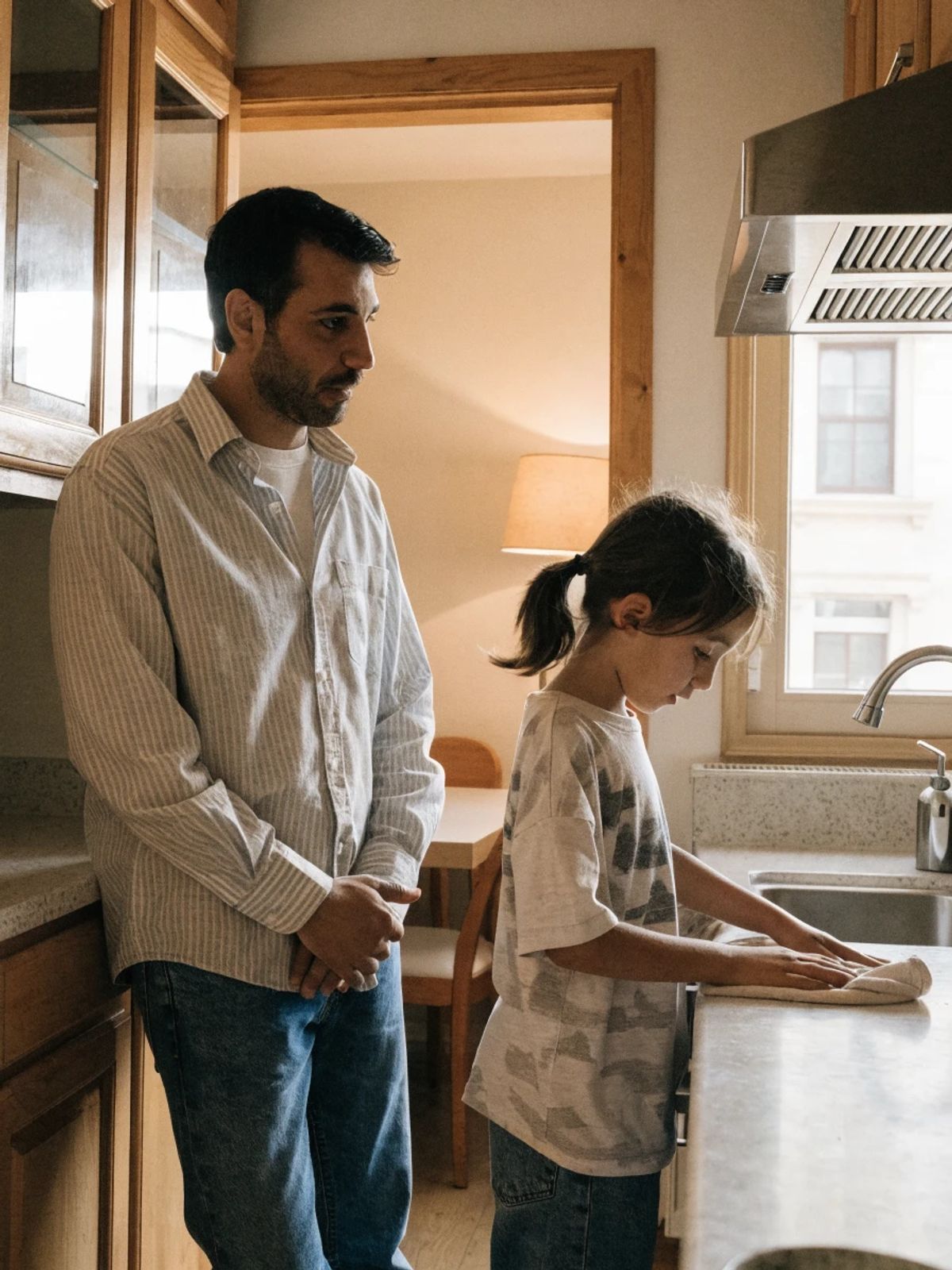
On the life skills side specifically: Marty Rossmann, professor emerita at the University of Minnesota, analyzed a longitudinal study of 84 children tracked from preschool into their mid-twenties. The single best predictor of a young adult's success, including relationships, academic outcomes, and self-sufficiency, was whether they had participated in household tasks starting at ages three and four. Not academic enrichment. Not tutoring. Chores.
The skill isn't the point. The habit of contributing is the point. Games that build that habit correctly, with feedback and progress and stakes with mercy, are doing something parents have been trying to do with sticker charts for decades.
What This Means Practically
If you want life skills activities for kids to actually stick, run them through this checklist:
- Immediate feedback: Does the kid see something change the moment the task is done, or do they have to wait for you to notice?
- Visible progress: Is there something accumulating, or does the slate wipe clean every week?
- Some autonomy: Does the kid have any say in how or when it gets done?
- Recovery mechanics: If they have a rough week, can they still come back and succeed?
- Co-op framing: Does the system encourage the family to win together, or does it pit siblings against each other?
You don't need an app for this. A well-designed paper system can hit most of these. But paper is hard to keep consistent, hard to make feel rewarding, and it doesn't respawn when life gets in the way.
How We Designed Chore Battles
I'll be direct about what we built and why.
Chore Battles is a life skills app for kids that we built at Yulixis with exactly these principles in mind. Not because we read a parenting blog. Because I've been studying game design and behavioral science for years, and every principle that makes games engaging maps cleanly onto the problem of getting kids to contribute at home.
Here's what we built, and why each decision was deliberate:
- A creature that grows with every chore. Immediate visual feedback. The kid sees something change the moment the task is verified.
- A weekly family boss fight. Every completed chore is a hit against it. Co-op framing. The family wins together, or the boss survives.
- A family leaderboard that resets every Monday, with protected sick days. Visible progress, but with the mercy mechanic built in. One slow week doesn't erase the habit.
- Photo verification. The kid snaps a photo when done. The parent sees proof. Both sides of the loop close.
- A parent-controlled rewards store. Screen time, treats, allowance. Parents set the rewards. Kids cash in earned points. Autonomy within structure that the parent defines.
- COPPA compliant. No targeted ads at kids. Never sells data.
We're still in waitlist phase, not yet live in app stores. That's intentional. We're building the right thing, not rushing.
If any of this sounds like what your family needs, you can get on the waitlist here.
The Bottom Line
Kids don't resist life skills because they're lazy. They resist bad design.
Game designers solved the engagement problem decades ago. The answer is feedback, visible progress, autonomy, mercy, and co-op framing. Every good life skills activity for kids follows these same principles, whether it looks like a game or not.
The sticker chart fails because it violates all five. A well-designed system doesn't.
Chore Battles
A chore tracker that runs like a game — creatures that grow, a weekly family boss, and a leaderboard that resets every Monday. Free to download.
Join the waitlist